Teaching My Daughter to Use Her Voice
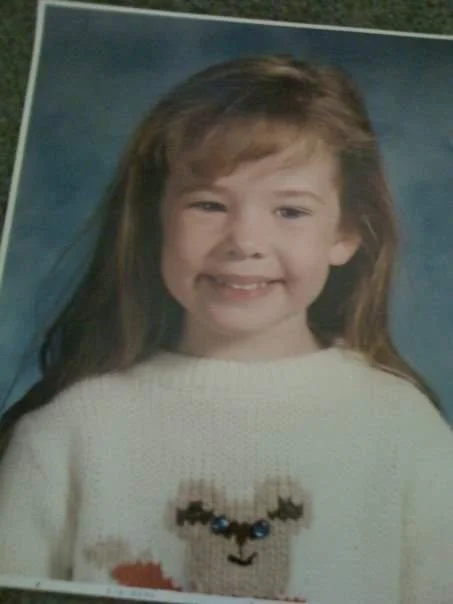
Me at 5
I did not realize some of the more traumatic things that happened to me as a child were actually traumatic until I heard myself say them out loud to my daughter, who is the same age I was when they happened.
I told her about how I was physically threatened and pushed against a wall on separate occasions in kindergarten by two different older boys—one who forced a kiss. About a neighbor boy who exposed his penis to me in first grade while we were digging holes in the dirt. About kids ripping out my favorite red glitter bow from my hair at recess and throwing it in the trash.
The point of telling her my story was not that it happened to me. It was what I did after each incident happened: I did not tell my parents. I did not tell a teacher. At five and six years old, I had already learned that other people’s comfort mattered more than my own. If something felt scary, humiliating, or wrong, I should swallow it and move on.
I didn’t want to burden her, but I want to break that inheritance.
I want something different for her than I had for myself. I want her to know that if anything ever makes her feel scared, unsafe, confused, ashamed, or uncomfortable, she can tell me. She can tell a teacher. She can tell another trusted adult. She never has to carry it alone.
I cannot protect her from every hard thing in the world. I cannot guarantee that nothing frightening, unfair, or uncomfortable will ever happen to her. What I can do is make sure she knows she has a voice.
I can teach her that if something feels wrong, she can speak up—even when she is scared, even when her voice shakes, even when she worries she is making too much of it.
And as I told her what happened to me, she looked at me with the clear-eyed certainty and said, “That was wrong.” She could not imagine keeping those things to herself. She even wanted to tell my parents, nearly four decades later, because she understands that parents are for confiding. To her, it was obvious: not only were those things were not okay, but I should never have had to carry them alone.
There is something startling about having your childhood reflected back to you by a child the same age you were when it happened.
It was unexpected and healing.
I did not realize that becoming a parent would uncover things I never knew I was missing. Or that loving my daughter would shine a light on the places where I had gone without.
After speaking to my daughter, I was feeling emotional, so I meditated. In my meditation, I visualized my younger self. I was sad for the five-year-old version of me who thought she had to carry everything alone. But I tried giving that little girl the comfort she did not have.
I do not want my daughter to ever believe that she must make herself smaller, quieter, easier, or more convenient. I am raising her to trust herself. To speak. To take up space. To know that her discomfort matters.
I hope my daughter grows up braver than I was. But maybe the truth is that, because of her, I hope to be braver too.